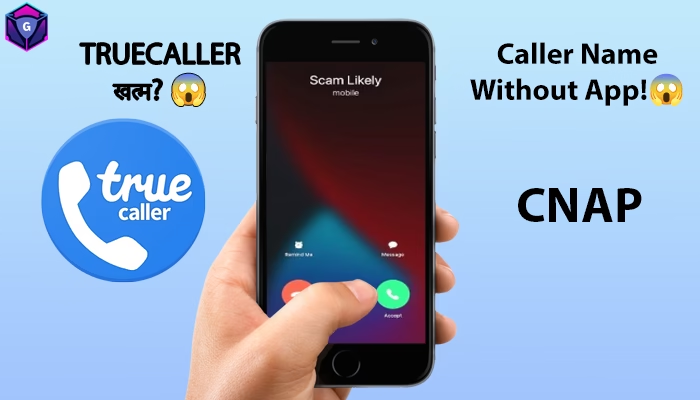
CNAP vs Truecaller is one of the most hottest caller ID comparisons in India right now, especially as CNAP is being rolled out to help reduce spam, scam, and fraud calls. In this guide, you’ll learn what CNAP is, how it works, and the 7 major differences between CNAP and Truecaller in 2026.
If you’ve been receiving calls lately, you may have noticed that something new: sometimes a caller’s name appears on your mobile screen even when the number is not saved. Many people assume it’s because of Truecaller, but that’s not always the reason anymore.
In this article, we will explain you the key differences between CNAP vs Truecaller, how CNAP works, when it is expected to go live across India, and which caller ID solution is better for you in 2026. Understanding the differences between CNAP vs Truecaller is crucial for making an informed decision.
CNAP vs Truecaller: What is CNAP?
CNAP (Calling Name Presentation) is a supplementary telecom service that displays the caller’s name along with the phone number during an incoming call. Unlike third-party apps, CNAP works directly through the telecom network.
The biggest advantage of CNAP is that it aims to provide the official registered name of the caller, based on SIM registration details collected during the KYC process.
So even if you do not have Truecaller installed, you may still see a caller’s name on your screen once CNAP is enabled in your area.
How Does CNAP Work?
To understand CNAP vs Truecaller, you must first understand CNAP’s working system.
When you buy a SIM card in India, telecom operators collect your details through KYC documents (such as Aadhaar or other valid identity proofs). These details include your registered name.
CNAP uses that registered information to show your name when you call someone.
CNAP Working Process (Step-by-Step)
Here’s how CNAP works in a simple way:
- Someone dials your number
- The telecom network checks the caller’s registered name in the database
- The call reaches your phone
- Your phone displays the caller’s number + registered name
Noted: CNAP is network-based, which means it works at the operator level, not through an external app.
When Will CNAP Go Live in India?
As per reports, CNAP has been under a pilot project since October 2025. A nationwide rollout is expected in a phased manner, and it may become available across India by March 31, 2026.
CNAP is expected to work on:
- 4G networks
- 5G networks
This rollout could change daily calling habits because users will no longer see only unknown numbers, they may also see the official caller name.
CNAP vs Truecaller: 7 Major Differences (2026 Comparison)
| Feature | CNAP (Calling Name Presentation) | Truecaller |
| 1) Data Source | Official KYC/SIM registration name (telecom database) | Crowdsourced data (users’ contact lists & community tags) |
| 2) Internet Requirement | No internet needed | Internet required (for best results) |
| 3) App Installation | No app required | App install required |
| 4) Accuracy | More reliable (official registered name) | Can vary (same number may show different names) |
| 5) Privacy | More privacy-friendly (no contact list sharing) | Uses community-based data, may require permissions |
| 6) Spam/Fraud Protection | Helps reduce fraud by showing registered name | Strong spam detection + community spam labels |
| 7) Working Type | Network-based service (telecom operator level) | Third-party app-based caller ID system |
Possible Limitations of CNAP
Even though CNAP is useful, it may have some limitations:
- If the name in KYC is incorrect, the same incorrect name may show
- Some users register SIMs with short names or initials
- People who prefer privacy may not want their full name displayed everywhere
However, reports suggest that users may get an option to deactivate CNAP using a Caller ID Restriction setting.
What is the main difference in CNAP vs Truecaller?
CNAP is a telecom network-based service that shows the official registered (KYC) name, while Truecaller uses crowdsourced community data.
Does CNAP need internet?
No, CNAP works without internet because it runs through telecom networks.
When will CNAP be available in India?
CNAP is expected to roll out nationwide in phases, possibly by March 31, 2026.
What does CNAP stand for?
CNAP stands for Calling Name Presentation. It is a telecom feature that shows the caller’s name along with the phone number on incoming calls.
What is the main difference between CNAP vs Truecaller?
The biggest difference is the data source:
CNAP shows the official KYC-registered name from telecom records,
while Truecaller shows a crowdsourced name collected from users and community tags.
Does CNAP require an internet connection?
No. CNAP works without internet, since it operates directly through telecom networks.
How many characters can CNAP display for the caller’s name?
How many characters can CNAP display for the caller’s name?
What if CNAP shows the wrong name?
If the KYC name was entered incorrectly during SIM registration, CNAP may display the same incorrect name. You may need to update your SIM KYC details through your telecom operator.
Recommended Reading:
Want to understand the security risks of WhatsApp calls and how location tracking works?
Read this detailed guide on WhatsApp Calls Location Tracking
.










1 thought on “7 Powerful Differences: CNAP vs Truecaller – Which Caller ID Is Better in 2026?”